
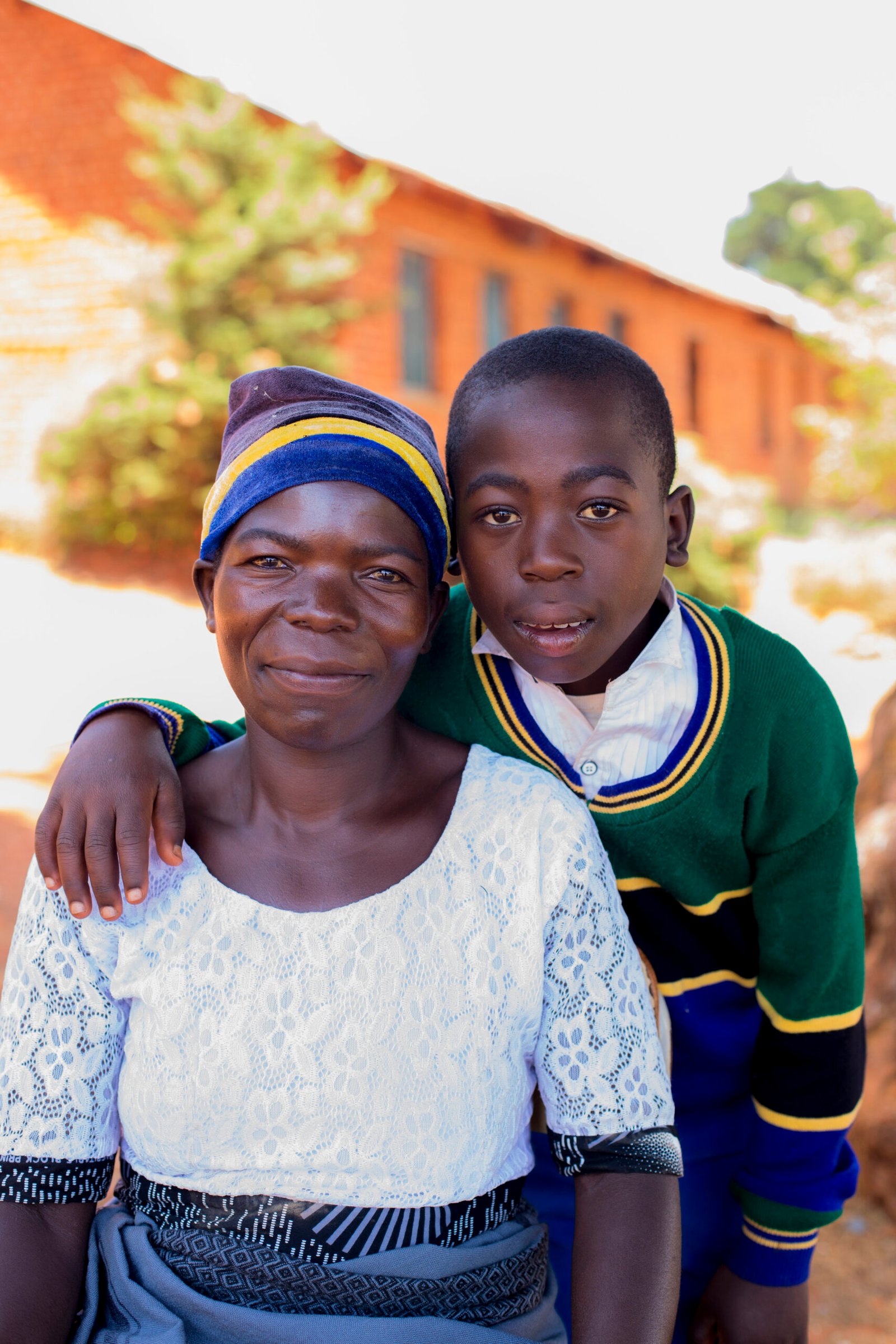
In the remote highlands of Ludewa District in Njombe Region, where life is shaped by
steep terrain, long distances, and limited access to basic services, lives a young boy named
Augustino, a child whose early life was shaped by both love and deep loss. From the
moment he was born, his mother Selina Haule noticed that he was different. He struggled
to speak, avoided eye contact, slept often, and found it hard to connect with others; signs
of autism that became clearer as he grew.
Unfortunately, instead of bringing the family closer, these signs became the very trigger
that tore it apart. Overwhelmed by fear, shame, and constant whispers from relatives,
Augustino’s father walked away when the boy was barely a year old. He never returned.
Selina was left alone to carry the pain, the responsibility, and the uncertainty of raising a
child with special needs in a community that did not understand him.
“When his father walked away, I felt like my whole world was collapsing,” Selina recalls.
“But when I looked at my son, I knew I had to stay firm. He needed love, not shame. He needed
someone who believed in him.” Narrates Selina.
Being a smallholder farmer, Selina grows maize, beans, and whatever else the season will
allow just to keep Augustino and two older brothers. Every day begins before sunrise and
ends long after sunset, yet she never lets her children feel her fear.
With no partner to support her, Selina often sells 20-kilogram of maize for as little as
5,000 Tanzanian shillings (approximately USD 2) just to survive. She would carry all
three boys on her back emotionally if not physically because her family, who once tried to
help, slowly stepped back as their own hardships grew.
“At first my relatives tried to help with food,” Selina says softly.
“But they also had their own families. I realized I was truly alone. I had to work twice as hard and protect my son from people who did not understand him.”
Before any support reached Madunda village, Augustino struggled deeply with
foundational learning. In his early years of schooling, he could not recognize letters or
numbers, follow simple classroom instructions, or keep pace with lessons delivered in
large, crowded classes. While other children began to read and write, Augustino remained
silent and withdrawn, often sitting at the back of the classroom, unnoticed and unable to
express his needs. His learning challenges were mistaken for inability rather than unmet
support, placing him at risk of falling permanently behind or dropping out altogether
However, Everything changed the day the Uwezo Tanzania assessment team under My
Village Project arrived in the village of Madunda. They encouraged Selina to enroll him in
Madunda Primary School and introduce him to Jifunze class,-an inclusive learning
program that uses songs, storytelling, communication exercises, and play to build literacy
and numeracy skills.
Selina hesitated because she believed that only expensive special schools could teach a
childlike Augustino, schools she could never afford
“I had lost hope of my son ever going to school,” she admits.
“I used to think education was not for children like him. I felt I could never give him what he needed. Uwezo and the Ludewa district council came to lift our spirits and hopes for his education and future”
Later, In the Jifunze class, Augustino began to shine. He learned to count, read small words,
form sentences, and speak more clearly. His confidence grew every week. Most
importantly, he learned to play and interact with other children something Selina once
feared might never happen.
“For the first time, I saw my child laugh freely,” Selina recalls, her voice breaking with emotion.“
He was not hiding. He was not afraid. He was part of a group. That day, I knew my son had a future.