
Tanzania has made major strides in expanding access to primary education, yet
evidence continues to show that many learners struggle to develop the life skills and
values that underpin successful learning and positive life outcomes. ALiVE’s 2022
assessment across 34 districts in Tanzania Mainland, involving 14,645 adolescents
aged 13–17 from 11,802 households, revealed that only 8% demonstrated
proficiency in problem-solving. These findings reframed national conversations
about learning success—shifting attention from academic attainment alone toward
the broader competencies required for 21st-century living. Within this context,
Mataya Primary School joined ALiVE’s 10-week parental engagement campaign in
Bagamoyo District, coordinated by OCODE and Uwezo Tanzania. The school became a
testing ground for integrating games-based, low-cost, and contextualized pedagogies
into everyday classroom practice, demonstrating how life skills can be nurtured even
in resource-constrained settings.
Approach Used
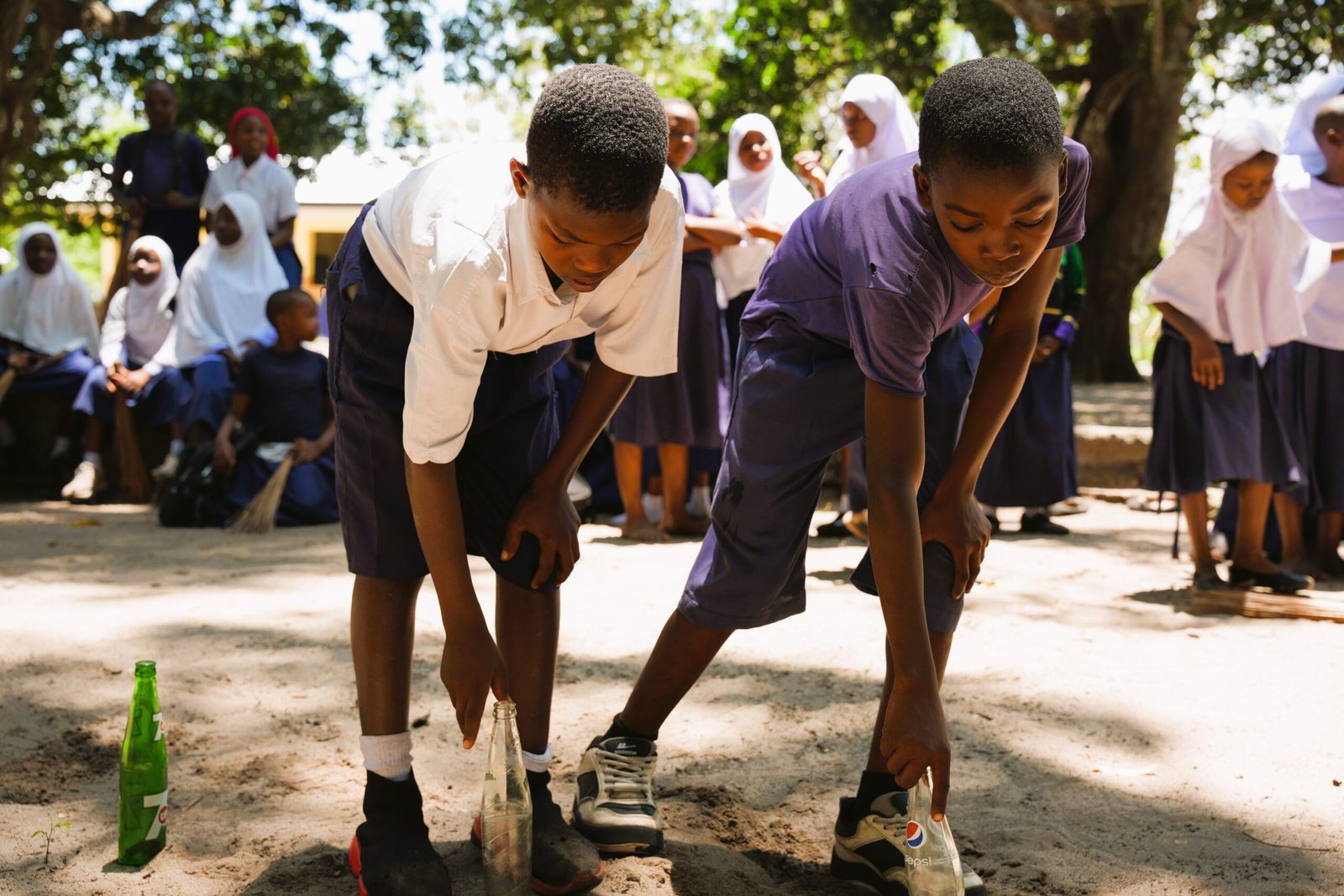
Teachers received practical orientation on using short, structured games and roleplay activities aligned to specific life skills. These activities were embedded within
existing lessons and routines rather than added as standalone sessions. Parents were
sensitized through community dialogues to reinforce the same skills at home,
creating consistency between school and household environments.
Case study of Mataya, Primary School Beyond the Classroom: Transforming Learning through Sports and Games
Key features of the approach included:
Simple physical and cognitive games using locally available materials Guided reflection after play (What happened? What worked? What can we improve?) Integration into subjects such as reading,
mathematics, and group work Emphasis on participation, experimentation, and safe failure
This design ensured feasibility, low cost, and immediate applicability for teachers Skills Strengthened Through regular practice, learners demonstrated growth in:
Problem-solving and planning Collaboration and communication Self-confidence and leadership
Emotional regulation and persistence Yusra, a Standard Five learner, described how a bottle-collection game taught her to organize her peers and propose solutions.
“That moment showed me my ideas matter. Now I speak in group work and guide my team.”
Akram, previously known for frequent anger, shared:
“I learned to breathe, wait, and talk slowly. Now I don’t shout. I feel proud because I can control myself. ”
Teacher Ziada observed that learners now persist longer on academic tasks, negotiate
roles in groups, and encourage one another behaviours directly transferred from the
games into classroom learning.
Observed Outcomes
Improved classroom cooperation and reduced conflict Greater learner engagement and task completion Increased learner confidence to express ideas Reduced teacher time spent on behaviour management Academically, teachers reported that learners apply planning and persistence strategies from games when tackling reading and mathematics tasks, leading to deeper engagement rather than quick abandonment of difficult work.
Scalability and System Relevance
The Mataya experience demonstrates a highly scalable model:
Requires minimal resources Uses existing teachers and lesson time Aligns with competency-based curriculum aspirations Reinforced through parental engagement Because the approach is simple, contextual, and adaptable, it can be integrated into school routines across diverse settings. When supported by teacher training institutions, district education offices, and PTA structures, games-based life skills pedagogy can can be scaled as part of Tanzania’s broader system shift toward holistic learning
Why This Case Matters
Mataya Primary School illustrates what ALiVE Phase II seeks to achieve at system level:
classrooms that nurture not only academic knowledge, but also the minds, emotions, and
social capacities of learners. As Teacher Ziada explains,
“Before ALiVE, we taught content
and hoped something would remain. Now, I see children growing not only in marks, but in
how they think, how they treat others, and how they solve problems.
”
This case affirms that when children are given structured opportunities to think,
collaborate, a